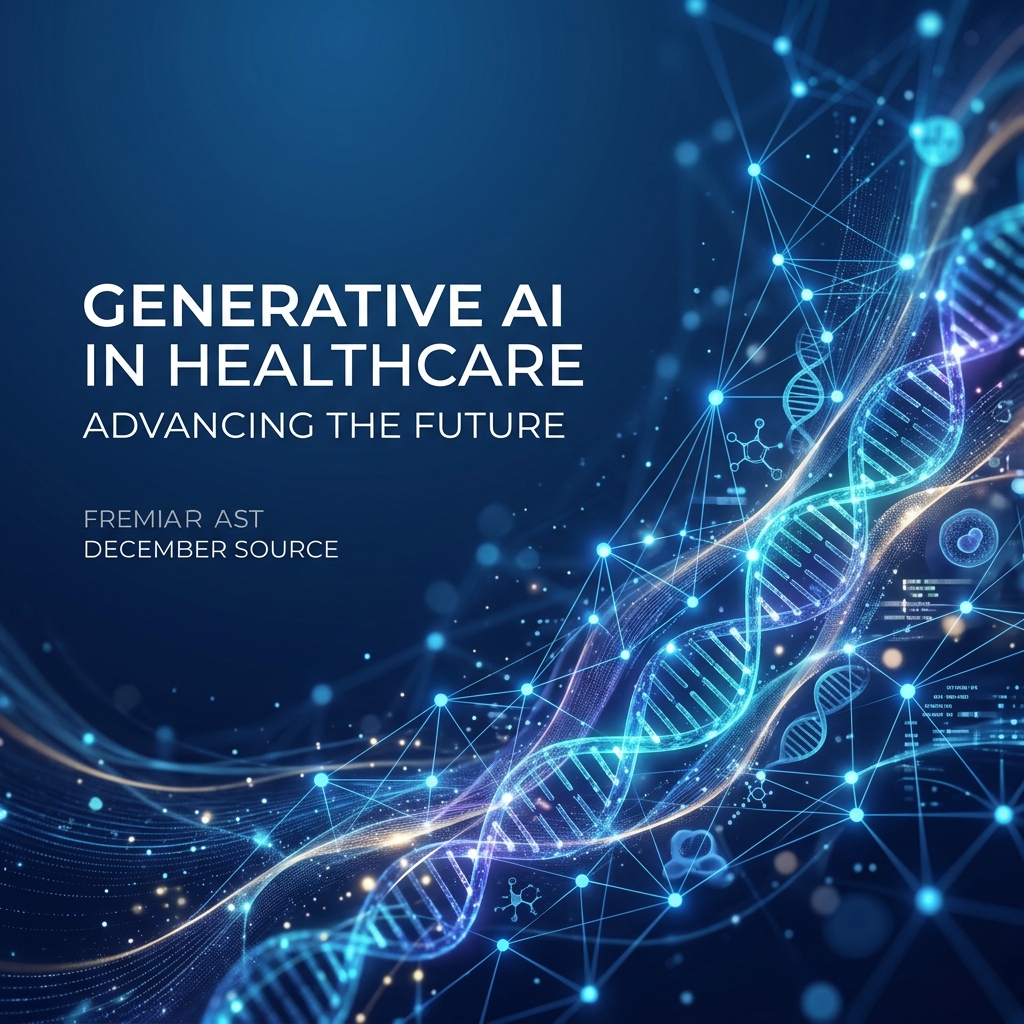


Revolutionizing Healthcare with GenAI
The 2027 International Conference on Trends in Generative AI is the premier forum for researchers, practitioners, and healthcare professionals. This year's theme, Generative AI for Healthcare, explores the profound impact of synthesis models, LLMs, and synthetic data on the future of medical science, patient care, and drug discovery.
A Conference Built Differently — For Impact, Not Just Publication
Unlike traditional AI conferences focused purely on theoretical novelty, TGenAI 2027 is designed from the ground up around real-world clinical translation, open science, and cross-disciplinary collaboration.
Reproducibility as a Standard
Every accepted paper must provide open-access code and datasets. We enforce reproducibility mandates — not as a suggestion, but as a core submission requirement — setting a new benchmark for scientific integrity in AI.
Bridging Clinicians & Technologists
TGenAI uniquely convenes medical doctors, bioinformaticians, AI engineers, and ethicists at the same table. Our curated cross-disciplinary program ensures research solves real clinical problems — not just benchmark scores.
Spotlight on Emerging & Global Voices
We actively champion researchers from developing nations and early-career scholars. Short paper tracks, dedicated mentorship sessions, and reduced student fees reflect our commitment to building a truly global, inclusive scientific community.
Ethics & Responsible AI First
TGenAI dedicates an entire track to the ethics of AI in healthcare — from bias in generative models to patient data privacy. Responsible innovation is not an afterthought; it is woven into every session and review criterion.
Interdisciplinary Track Design
Our 6 focused tracks span from neurodegenerative disease diagnostics to bioinformatics and AI security — each co-designed with domain specialists. This ensures submitted research is evaluated by the right experts, not just AI generalists.
From Lab to Clinic: Translational Focus
Papers are evaluated not only on technical merit but also on their potential real-world clinical impact. Accepted works are showcased to hospital systems, health-tech startups, and regulatory bodies attending the conference.
Important Deadlines
Keynote Speakers
Visionaries leading the intersection of artificial intelligence, neuroengineering, and semiconductor metrology.
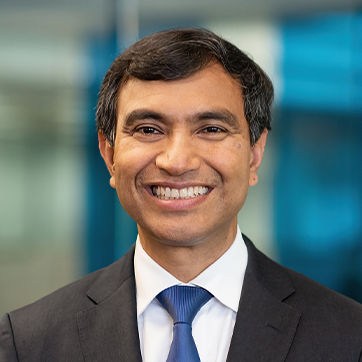
Dr. Achin Bhowmik
CTO, Starkey & Adjunct Professor, Stanford Medicine
Pioneer in sensory augmentation, perceptual computing, and neuroengineering. Leading global initiatives integrating advanced AI and sensors into wearable medical devices.
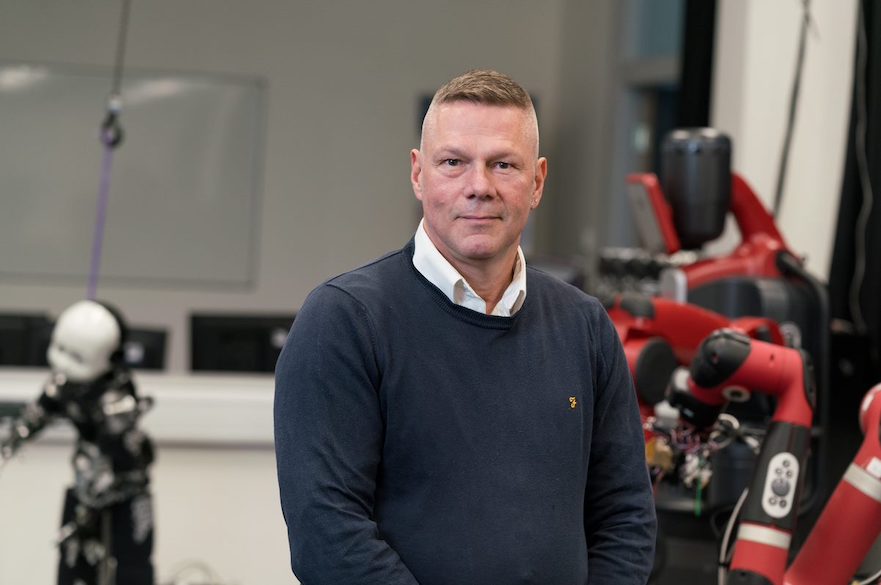
Prof. David Brown
Interactive Systems Professor, Nottingham Trent University
Internationally recognized leader in interactive systems, intelligent environments, and virtual reality for social inclusion and healthcare rehabilitation.

Dr. Mufti Mahmud
Cognitive Computing Professor, King Fahd University (KFUPM)
Renowned brain informatics researcher specializing in clinical cognitive computing, neuroengineering, and ethical AI architectures for personalized medicine.
Dr. Shida Tan
Senior Scientist, NSTC Group at NIST
Distinguished physical debug and device prototyping engineer. Former Senior Principal Engineer leading hardware innovation and Failure Analysis R&D at Intel.
Tracks & Scopes
We invite submissions across 6 specialized, multidisciplinary tracks focusing on the application of Generative AI in healthcare.
Imaging & Neurodegenerative Diagnostics
Synthesis, super-resolution, and cross-modal translation of MRI, CT, X-ray, and pathology images, with a specialized focus on early biomarker detection in Alzheimer's, Parkinson's, and related neurodegenerative disorders.
Bioinformatics & Molecular Synthesis
De novo molecular design, protein structure prediction, peptide generation, and computational bioinformatics modeling using diffusion-based frameworks and generative biology paradigms.
Clinical LLMs & Personalization
Automated clinical summarization, clinical note generation, digital twins, and treatment response simulation designed to optimize patient-specific therapies and medical workflows.
Security, Privacy & Ethical Risks
Mitigating adversarial threats in medical AI, standardizing data-privacy with synthetic patient generation, exploring bias in diagnosis, and establishing framework compliance.
Multimodal Fusion & Signal Synthesis
Fusing diverse clinical modalities including text, pixel, genomics, and electronic sensor signals (ECG/EEG) for real-time monitoring and holistic diagnostic models.
Rare Pathology & Low-Resource Care
Data augmentation strategies for understudied conditions, synthetic cohorts for rare disease modeling, conversational mental health agents, and clinical support systems in low-resource environments.